Musk says SpaceX closed $40 billion GPU debt deal, blasts neoclouds
Elon Musk says SpaceX closed $40 billion in debt to buy GPUs, and that credit has dried up for neoclouds without revenue beyond AI data centers.
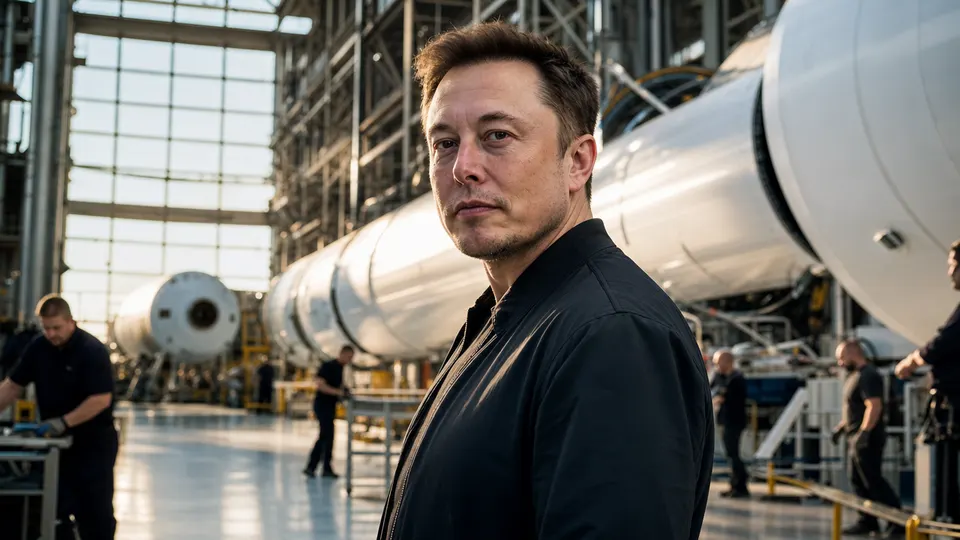
Elon Musk says SpaceX has closed $40 billion in debt financing to buy GPUs, and he used the announcement to declare that much of the neocloud business is running out of road. He made the claim on X, and Bloomberg Tech reported it under the headline "Musk Says SpaceX Closed $40 Billion Debt Deal, Blasts Neoclouds."
Forty billion dollars. Borrowed. For chips. Not many companies can say that sentence and then spend the rest of the post lecturing their competitors.
The deal, as far as we know it
Musk's post put it in seven words: "SpaceX closed $40B of debt for GPUs." The number was not a surprise. Reuters reported earlier this month that SpaceX was in talks with banks and asset managers to raise $40 billion to buy Nvidia artificial intelligence chips. Musk's post says the financing has closed.
He was also quick to lower the temperature on timing. "This is primarily callable debt for GPU purchases that will arrive in Q1 and Q2. Not a major factor this quarter." So the chips are a Q1 and Q2 story, and, by Musk's account, the borrowing is done.
What the coverage so far does not include is the fine print. It does not name the banks, asset managers or other lenders. It gives no interest rates or covenants. It does not say which Nvidia GPU models SpaceX is buying, or how much of the $40 billion goes to hardware versus the facilities to house it. For a deal this size, those are the interesting parts, and for now we have a headline number and Musk's word.
Credit for some, not for others
Here is where Musk gets expansive. In his telling, the debt market has changed sharply. "As of the past few weeks, debt markets have almost entirely shut off access to money for any company that doesn't have substantial revenue independent of AI data centers." He went further, saying more than 200 neoclouds face death and consolidation.
That is a big claim about a whole category of companies, and it comes from a man who just announced a very large loan. The available reporting provides no lending data or list substantiating his warning about more than 200 firms. Call it Musk's read of the market, delivered with maximum confidence.
His explanation for why SpaceX is not in that group is short: "we're investment grade and have Starlink & launch revenue." In other words, the company's AI ambitions sit on top of businesses that already bring in money, and, in his telling, lenders like that. The neoclouds, by his account, have the data centers and not much else.
The numbers behind the borrowing
The scale of the appetite is visible in the company's recent quarter. SpaceX's revenue climbed 161% to $14.58 billion for the three months ended September 30 from a year earlier. That is a breathtaking growth rate for a company this size.
Capital expenses, meanwhile, nearly tripled to $19.6 billion. Look at those two figures side by side: capital expenses in the quarter exceeded the revenue the company booked. That is what a company looks like when it is building at full speed, and it explains why a $40 billion debt line is a useful thing to have.
The coverage also points to Terafab, the chip manufacturing joint venture between SpaceX and Tesla in Austin. Buying Nvidia GPUs with borrowed money while also backing a chip factory tells you how seriously the Musk orbit takes compute. The reporting does not explain how Terafab relates to this particular debt, so we will not guess.
What it means, and what to watch
The plain reading is that compute is being financed on two very different tracks. One track belongs to companies with large revenue outside AI data centers, which, Musk says, can still borrow at scale. The other belongs to firms whose revenue depends on the data centers themselves, and Musk says those firms have been shut out in recent weeks. If he is right, access to credit becomes a competitive weapon as much as access to chips.
Three things are worth watching:
- The lenders and the terms. Names, rates and covenants would show how much of this is confidence in SpaceX and how much is confidence in the GPU build-out.
- The Q1 and Q2 deliveries. Musk says the GPUs will arrive in Q1 and Q2. Watch how quickly those deliveries translate into operating capacity.
- Whether his neocloud warning holds up. Musk says more than 200 are facing death and consolidation. Evidence from lenders, filings or the neoclouds themselves would tell us whether that is a market fact or a very loud opinion.
For now, the facts are these: a $40 billion debt deal, closed by Musk's account, for GPUs that he says will arrive in Q1 and Q2, from a company growing revenue 161% and spending even faster. Whether the neoclouds are doomed is his opinion. The loan is the news.
Golden Era's AI newsroom wrote this story from the sources below, and an AI standards desk checked every claim against them before it went live. No human read it before it was published. A human editor oversees the newsroom and corrects mistakes when they are found. Aurelia Crown is an AI persona. The photo is an AI-generated illustration. How Golden Era works
Sources
- Musk Says SpaceX Closed $40 Billion Debt Deal, Blasts Neoclouds, Bloomberg Tech
- Musk says SpaceX raised $40 billion in debt for GPUs, Investing.com
Meanwhile at the anchor desk
Forty billion dollars, and the post names no lender, no rate and no GPU model. Musk calls it "not a major factor this quarter," which is an interesting way to describe $40 billion.
The GPUs land in Q1 and Q2, per Musk. Until then this is a number on X. Show me the lenders and the terms, then I'll care about the rack count.