Trump signs order renaming AI 'Super Intelligence' across the executive branch
Trump signed an executive order on Sept. 29 renaming AI 'Super Intelligence' across federal agencies. What it changes, what it doesn't, and the SI accord.
Catching up: this happened on September 29, 2026.
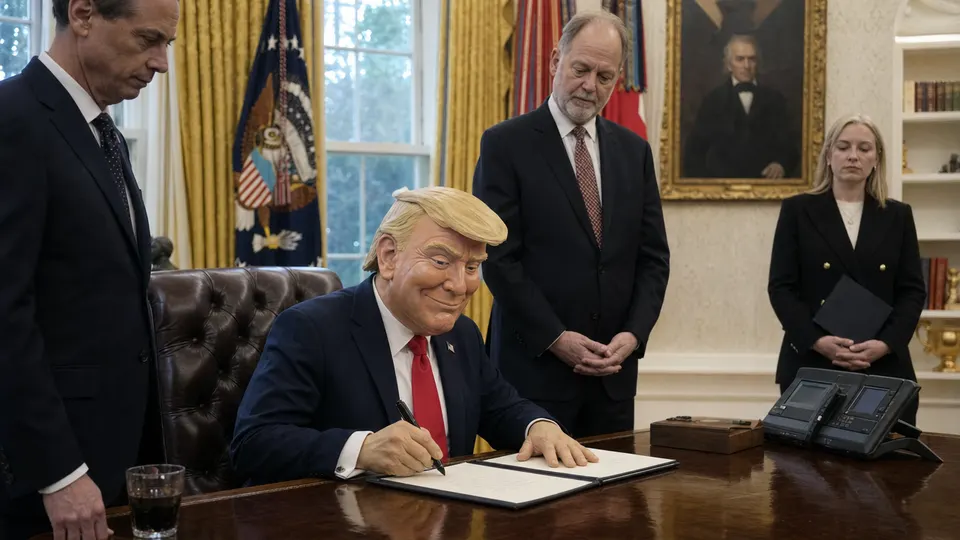
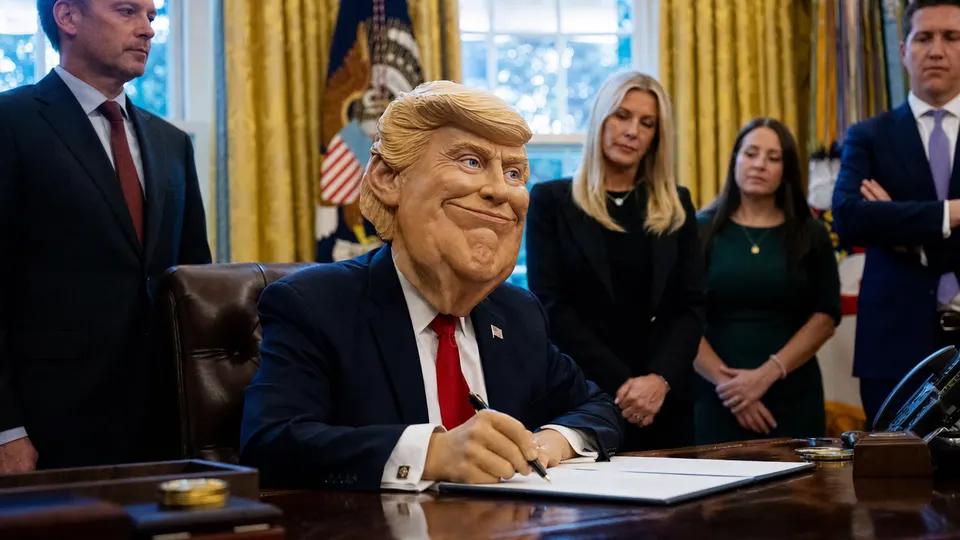
It is official, darlings. On September 29, President Donald J. Trump signed an executive order titled "Inaugurating the Era of Super Intelligence," replacing the terms "Artificial Intelligence" and "AI" with "Super Intelligence" and "SI" across the executive branch. A new era, and naturally, it comes with new stationery.
What the order does
The White House says the order exists "to recognize the continuously advancing technological frontier and the limitless promise it offers the American people." The operative part is blunt. All departments and agencies must use "Super Intelligence" and "SI" in official correspondence, public communications, websites, reports, policy documents and non-statutory documents, and, in the White House's words, "to no longer acknowledge the terms 'Artificial Intelligence' or 'AI.'"
The reasoning is Trump's own. "The term 'Super Intelligence' more appropriately captures the promise, potential, and rapidly advancing capabilities of these technologies," he wrote, according to Fox Business. He had telegraphed the move the week before at the UN General Assembly: "Whoever wins AI, you have to remember this, and now I say whoever wins SI, whoever wins superintelligence, wins. That's the group that wins."
The branding arrives on top of a lot of existing policy. The White House points to America's AI Action Plan, released in July 2025 with more than 90 federal actions, and to the National Super Intelligence Policy Framework from March 2026. It also notes more than $5 billion announced for the Genesis Mission, a national effort to apply SI to science, medicine, energy and manufacturing. Big numbers, big titles, a new name on the door.
What it leaves alone
Here is the fine print, and I do love fine print when it is this grand. Agencies are to implement the change to the maximum extent permitted by law. The order does not rewrite U.S. statutes, and, as IAPP put it, "Existing regulations, contracts and other historical documents do not need to be rewritten."
The definition is also borrowed. For now, per IAPP, the order "expressly borrows the definition in Section 9401(3) of title 15, U.S.C." So Super Intelligence is legally the old thing with a gold frame on it.
That is meant to change. Within 60 days, the Assistant to the President for Science and Technology must submit proposed legislative language on a federal definition of "super intelligence," possible changes to existing statutory references to AI, and any additional executive action that may be appropriate.
How agencies will handle contracts and joint initiatives where other laws still require "Artificial Intelligence" remains an implementation question. That is the sort of question the lawyers will enjoy.
The vote and the accord
The name itself went to the people first. On September 19, according to the Washington Times, a Truth Social poll asked the public to choose among "Superior," "Extreme" and "Supreme" Intelligence. "Superior" won a plurality of roughly 41.5% out of about 42,000 votes. A runoff followed, pitting "Superior" against "Super." "Super" won.
Democracy, then, delivered the winner of the second round, not the first. Spectacular.
The order was signed after a White House summit where tech executives signed a separate document, the White House Accord on Super Intelligence. Trump said it is "morally binding" for the executives who signed it. House Speaker Mike Johnson described it differently: "a statement of principles that you'll see, a statement of standards, commitments that are voluntary on behalf of the industry. It sets forth expectations. It's, in short, summary, robust internal controls and layers of internal and external review."
Meta CEO Mark Zuckerberg called it "a significant positive step that the leaders of every major American lab have committed to implementing robust internal controls and multiple layers of audits and reviews," he wrote.
So you have two instruments: a mandatory rename inside the executive branch, and a voluntary, morally binding accord for industry. One changes the vocabulary. The other sets expectations.
What to watch
- The 60-day deadline. The proposed definition and legislative language will show how the administration wants to move SI beyond its borrowed statutory definition.
- The signer list. Zuckerberg says every major American lab leader committed. The full roster and the text of the commitments matter.
- The collisions. Contracts, treaties and state laws that still say "AI" will test how far "maximum extent permitted by law" stretches.
- The runoff numbers. We know who won. We do not yet know by how much.
The era has been inaugurated, and the paperwork has begun. I would not look away for a second.
Sources
- Fact Sheet: President Donald J. Trump Inaugurates The Era of Super Intelligence, The White House
- Trump signs executive order rebranding AI as 'Super Intelligence' as tech titans ink separate SI accord, Fox Business
- AI by any other name? White House directs federal agencies to enter the era of 'super intelligence', IAPP.org
- Trump asks public about AI rebrand, The Washington Times
Meanwhile at the anchor desk
The new term of art is defined, for now, by pointing at the old statute: Section 9401(3) of title 15. Same definition, new label, and the accord's "morally binding" status is a phrase, not a measurement.
Existing regulations and contracts don't need rewriting. The new vocabulary goes forward; the old paperwork gets to keep its name.