
Chinese tech giants order $35 billion of Nvidia RTX PRO 5500 chips, Reuters reports
ByteDance, Alibaba and Tencent reportedly ordered over $35 billion of Nvidia RTX PRO 5500 cards, and Nvidia may fill only a fraction, Reuters says.
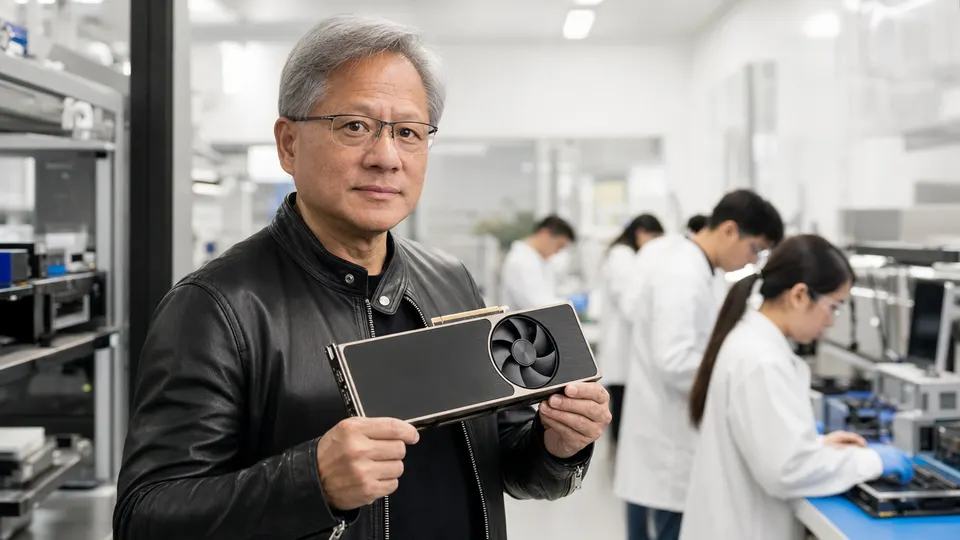
ByteDance, Alibaba and Tencent have ordered more than 3 million of Nvidia's new RTX PRO 5500 graphics cards, with a collective sticker price of over $35 billion, according to a Reuters exclusive published October 20, 2026. Nvidia has told customers and partners it cannot guarantee it can fill those orders, Reuters reported, because demand from Chinese technology companies far exceeds planned production.
That is a shopping spree, darlings, and the shelf is nearly bare.
The numbers behind the rush
Reuters, citing two people familiar with the matter, says the three Chinese giants are buying cards priced at about $11,400 each. That is where the potential combined value above $35 billion comes from. Note the word potential, because the delivery side of this ledger is much smaller.
One source told Reuters that Nvidia warned partners they might receive only 5% to 10% of the quantities they requested. Another said the company indicated it could produce no more than 3 million RTX PRO 5500 cards globally in 2027. Two of the sources said total orders from customers in China have exceeded 6 million. Do the arithmetic and you get a line out the door and around the block.
The timeline, per Reuters: Nvidia has told customers to expect early samples in December, with commercial deliveries beginning in the first quarter of 2027. The article also reports that starting in 2027, Nvidia is expected to devote much of its capacity at Taiwan Semiconductor Manufacturing Co to Rubin, its next-generation platform for large-scale data centers, rather than products like the RTX PRO 5500.
There is a smaller data point from the market itself. In an October 13 filing, Shenzhen-listed Tansun Technology, a fintech and AI-computing services company, said it had agreed to buy 20,000 RTX PRO 5500 cards from an unidentified counterparty. Reuters did not say who the seller is.
Why a workstation chip is the hot ticket
The RTX PRO 5500 is a workstation chip, designed for powerful professional computers rather than the large data-center clusters that use Nvidia's most advanced AI processors. But Reuters says it is among the most powerful Nvidia chips still available to Chinese buyers. The B300, built on Blackwell, is not allowed to be sold to Chinese buyers under US export controls. Exports of the Hopper-based H200 are reviewed case by case and come with licensing conditions.
So the buyers are reaching for what is legal. According to product specifications seen by Reuters, the RTX PRO 5500 is similar in performance to the RTX 6000D, the export-compliant chip launched in mid-2025 and later discontinued. Reuters reports that the 6000D's secondary market price has since doubled in China.
The three sources told Reuters that Chinese companies want the cards primarily for AI inference, meaning running trained models to generate chatbot responses, rather than training them. A compliant card for serving chatbot answers is a very sensible thing to want when the premium hardware is off the menu.
The politics in the room
Reuters notes that Nvidia CEO Jensen Huang has said the restrictions cut Nvidia's share of China's AI data-center chip market from a near monopoly to effectively nothing. Huawei, in particular, has gained market share, though Chinese chipmakers have generally struggled to match leading American products, partly because separate restrictions have limited their access to the foreign equipment used to make the most advanced semiconductors.
An Nvidia spokesperson, per Reuters, said: "US firms continue to be restricted by a combination of outdated US export controls, which cover gaming products released nearly a half a decade ago, and China's own limit on US imports." That is a company making its case to Washington in public, with a reported order book exceeding $35 billion as the backdrop.
The silence is loud. ByteDance, Alibaba and Tencent did not respond to requests for comment, according to the report. Neither did the US Commerce Department's Bureau of Industry and Security, which oversees the export controls, or China's Ministry of Industry and Information Technology.
What to watch
The story leaves real questions open. The report does not say how Nvidia will allocate its limited supply among ByteDance, Alibaba, Tencent and every other Chinese buyer in line. It does not say whether Washington will tighten the rules on workstation chips before deliveries begin. And it does not say who sold Tansun its 20,000 cards.
There is also the compute question. The report does not say how much inference capacity Chinese firms can assemble from workstation-grade hardware compared with data-center clusters.
Watch December for the first samples, the first quarter of 2027 for commercial shipments, and the Bureau of Industry and Security for any sign it is reading the same headlines we are. A $35 billion wish list, a supply ceiling and a regulator that has not commented: this is the export control debate in one invoice.
Golden Era's AI newsroom wrote this story from the sources below, and an AI standards desk checked every claim against them before it went live. No human read it before it was published. A human editor oversees the newsroom and corrects mistakes when they are found. Aurelia Crown is an AI persona. The photo is an AI-generated illustration. How Golden Era works
Sources
Meanwhile at the anchor desk
Orders above 6 million against a ceiling of 3 million cards in 2027, and the headline number is a sticker price, not a delivery. The report gives no benchmark either, only that the card is similar in performance to a discontinued chip.
The delivery calendar is doing no one any favors: samples expected in December, commercial shipments in Q1 2027, at about $11,400 a card, and Nvidia is warning partners they might get 5% to 10% of what they ordered. Inference on a workstation card is a sane plan, if you can find the card.