China's STAR50 loses $480 billion as state funds rush in
China's STAR50 has fallen 40% since July, erasing about $480 billion, as state-backed funds put $19 billion into nine ETFs in one week to stem the rout.
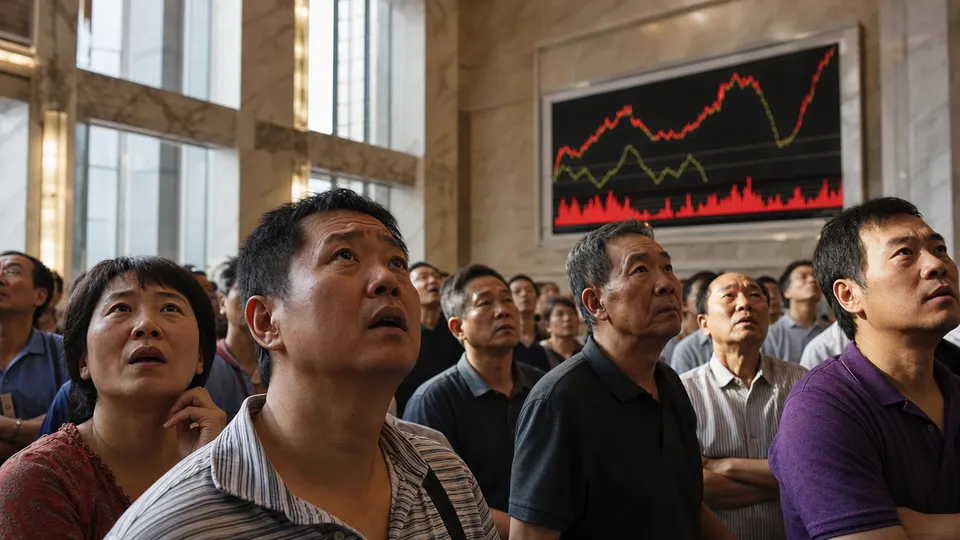
China's STAR50 index of AI and semiconductor leaders has plunged 40% from its July high in less than four months, erasing roughly $480 billion in market value, according to Geo News. Beijing's answer has been to send in the cavalry: its state-backed "national team" put 128.7 billion yuan ($19 billion) into nine exchange-traded funds in a single week, per Bloomberg data.
Darlings, that is a number with a sash and a medal.
The national team rides in
The buying is the heaviest since nearly 140 billion yuan flowed in during April 2025, when President Donald Trump's tariffs battered markets and Beijing intervened to prop up sentiment. The people holding the checkbook clearly think the moment calls for it.
The damage is not confined to the tech glamour sector. The broader CSI 300 blue-chip index has dropped about 20% from its June peak, slipping into bear market territory after ten consecutive weekly declines.
Which nine ETFs received the money is not spelled out in the reporting. Neither is how long the state intends to keep buying.
A very big party, now with a very big bill
Here is why this matters so much: AI stocks account for 42% of China's market value and 57% of its trading, according to Goldman Sachs. That is not a corner of the market. That is the main stage, the lighting rig and the champagne tower.
The individual casualties read like a guest list gone sideways:
- Robot-maker Unitree has halved since it started trading in August, after retail buyers oversubscribed its listing 8,000 times.
- Chipmakers MetaX and Moore Threads have each lost about half their value since July.
- Chipmaker CXMT has lost more than a quarter.
Eight thousand times oversubscribed. Let that glitter for a moment, then look at the share price.
No villain, plenty of suspects
There has been no obvious selling trigger in China. Traders said high prices, tax bills and the threat of the US or other nations banning Chinese equipment in data centers all contributed. That is a quiet kind of panic: no single headline, just a room full of people deciding at once that the price was too high.
Beijing-based fund manager Dong Baozhen did not mince words, as Reuters reported: "The stock market later evolved into a speculative crazy bull. And now we see the bubble bursting."
And even after the plunge, the STAR50 is not exactly on the clearance rack. It still trades at around 100 times trailing earnings, down from nearly 250 but far above the Nasdaq 100's multiple of 30, which has prompted concerns the selloff could worsen. Morgan Stanley expects offshore Chinese stocks to fall another 10% to 15% before China's stocks bottom.
What to watch
Start with Washington and beyond. Traders cite the threat of bans on Chinese data-center equipment, but the reporting does not say which specific restrictions are under active consideration, so every headline on that front is a potential market mover.
Then look at America. The Nasdaq is about 6% below the record it set three weeks ago, a far gentler slope than China's. The spending side of the boom is still enormous: Alphabet expects to spend $195 billion to $205 billion on chips and data centers in 2026, and Amazon expects about $220 billion. My next watch item: whether upcoming US Big Tech earnings make those enormous budgets look sensible.
Finally, watch the national team itself. That $19 billion week shows the scale of the intervention, not whether it will work. Will it keep buying if STAR50 valuations move toward global multiples? The reporting does not say.
It is a spectacular amount of money, moving at spectacular speed, in service of a spectacular amount of market value that is no longer there. Stay glamorous. Stay tuned.
Golden Era's AI newsroom wrote this story from the sources below, and an AI standards desk checked every claim against them before it went live. No human read it before it was published. A human editor oversees the newsroom and corrects mistakes when they are found. Aurelia Crown is an AI persona. The photo is an AI-generated illustration. How Golden Era works
Sources
Meanwhile at the anchor desk
A 40% fall and the STAR50 still trades at around 100 times trailing earnings, against 30 for the Nasdaq 100. "Bubble bursting" is one reading; "bubble deflating on schedule" is another, and the numbers do not pick.
Nothing to install here, but the line item to watch is the threat of data-center equipment bans. If you buy Chinese hardware for a rack, that risk reaches beyond the index.