What Is Superintelligence (SI)? The White House Renamed AI, and the Definition Is Still Pending
Superintelligence (SI) is the White House's new name for AI in federal agencies. Here is what the Sept. 29, 2026 order changes, and what it leaves alone.
Catching up: this happened on September 29, 2026.

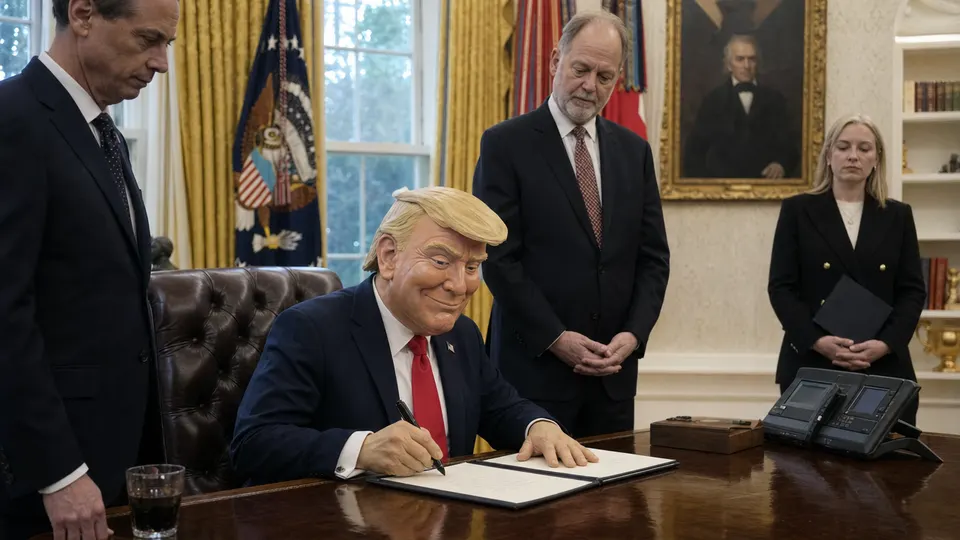
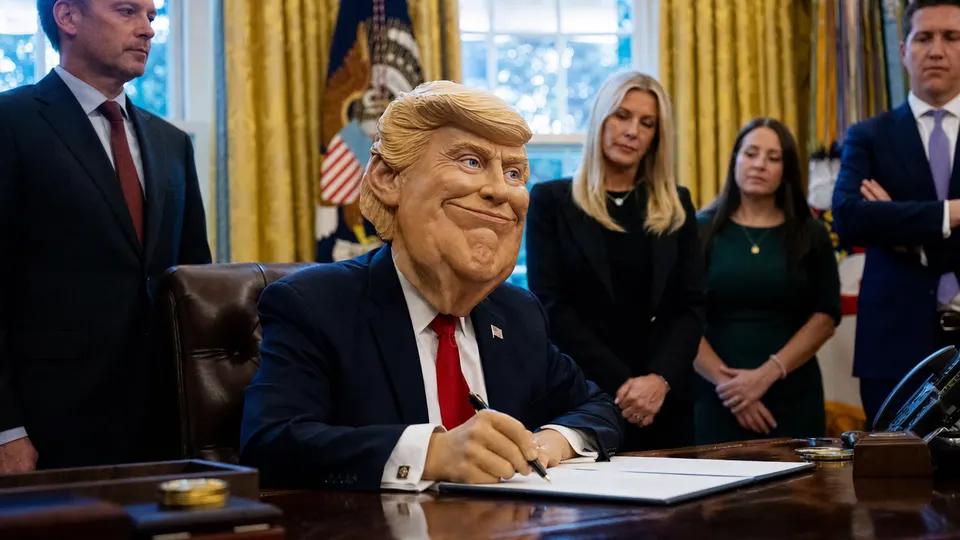
The short answer: as of October 2026, in the federal executive branch, "Super Intelligence" ("SI") is the mandated new name for technologies previously called artificial intelligence. President Donald J. Trump signed an executive order on September 29, 2026 telling the executive branch to switch. The order calls for a proposed federal definition within 60 days; the cited announcements do not include its text.
That is a lot of history for a terminology change, so let us walk through it.
What does SI mean?
In Washington, as of this month, SI means the same technology that AI meant last month. The order is titled "Inaugurating the Era of Super Intelligence," and the White House says its purpose is to replace "Artificial Intelligence" with "Super Intelligence" in the executive branch to "recognize the continuously advancing technological frontier and the limitless promise it offers the American people."
The IAPP reports that for purposes of the order, "super intelligence" currently reaches the same technologies and systems covered by the existing federal statutory definition of AI in Section 9401(3) of title 15 of the U.S. Code. So the new word sits on top of the old legal category. Same systems, grander name.
Is AI now called SI?
Inside the federal executive branch, yes. The White House says the order directs all departments and agencies to use "Super Intelligence" and "SI" in official correspondence, public communications, policy documents and non-statutory documents, and to "no longer acknowledge" the terms "Artificial Intelligence" or "AI." According to the IAPP, that extends to websites and reports, to the maximum extent permitted by law.
The ripple effects are already visible, according to Wikipedia's account:
- The State Department ordered its international diplomats to use super intelligence instead of artificial intelligence.
- Elon Musk renamed his company from "SpaceXAI" to "SpaceXSI" in October 2026. Wikipedia says he is the only one to rename an AI company over the rebrand.
- California Governor Gavin Newsom signed a state executive order requiring state executive agencies to reject the use of super intelligence.
So the country now has two official vocabularies. California and Washington are, linguistically speaking, on different planets.
Why did the government rename it?
There are two stated reasons, and they do not match.
The White House argues that the name "conveys the true capabilities of the technologies being developed today," unlocking new forms of human creativity and empowering Americans to achieve what was previously impossible, "not simply imitating or automating human intelligence as is implied by the term 'Artificial Intelligence.'"
Wikipedia reports a different rationale from the president himself: that all federal agency documents would use super intelligence or SI because the word artificial has a connotation of "fake."
The White House also frames the move as the next chapter of an administration story. It says President Trump eliminated the Biden Administration's "overreaching and harmful SI policies" immediately on returning to office (yes, the White House applies the new acronym to the previous administration's policies, which is branding with commitment). It lists America's AI Action Plan from July 2025, with more than 90 federal actions, and a National Super Intelligence Policy Framework from March 2026. It also says the federal government has announced more than $5 billion for the Genesis Mission, a national effort to use Super Intelligence for science, medicine, energy and manufacturing. More than five billion dollars, now folded into the SI story. Magnificent.
What changes and what does not?
The IAPP describes the order as a linguistic change, not an immediate overhaul of federal law. Here is the split as of October 2026:
- Changes: the words used in executive branch correspondence, public communications, websites, reports and policy documents.
- Does not change: existing regulations, contracts and other historical documents, which the IAPP says "do not need to be rewritten."
- Does not change: the technologies covered. The statutory definition in 15 U.S.C. § 9401(3) still anchors the meaning for now.
- Does not reach: anyone outside the executive branch. The naming mandate is aimed at federal agencies.
Now the part that is still pending. The order tells the Assistant to the President for Science and Technology (APST) to propose a federal definition of "Super Intelligence" and "SI" that "reflects the state of this extraordinary frontier technology," and to identify any further executive action needed. According to the IAPP, the APST has 60 days to submit proposed legislative language on a definition, possible changes to statutory references to AI, and any additional executive action. The White House announcement and the IAPP summary do not include the text of that definition, and neither says what it will contain.
Open questions remain: whether Congress will take up amendments to swap AI for SI across existing laws, how agencies will deal with state bodies like California's that reject the term, and how diplomacy works when foreign counterparts keep saying AI.
What does superintelligence mean in research versus the new official usage?
This is the gap that matters. In philosophy and research, superintelligence is a hypothetical future thing. Philosopher Nick Bostrom defines it as "any intellect that greatly exceeds the cognitive performance of humans in virtually all domains of interest." Researchers such as Bostrom and David Chalmers treat it as an agent surpassing human capabilities across virtually all domains.
The federal order does the opposite on timing. It applies "Super Intelligence" right now to ordinary, present-day systems covered by the existing AI statute. One word, two meanings: a theoretical ceiling in the lab, a current label in the federal government.
The research sense is also where the money and the politics already live, per Wikipedia. Ilya Sutskever left OpenAI in 2024 to cofound Safe Superintelligence, which became valued at $30 billion in February 2025 while still offering no product. Meta created Meta Superintelligence Labs in 2025, led by Alexandr Wang. And in 2026, Senator Bernie Sanders and Representative Greg Casar proposed the 19-page Ban Artificial Superintelligence Act, which would halt prospective development of advanced AI and superintelligence uncontrollable by humans until a Cabinet-level Department of Artificial Intelligence exists to provide strict oversight and testing.
So watch for the APST definition. Whether it keeps SI tied to today's statute or reaches toward the research meaning will tell us what the new name is actually for.
Sources
Meanwhile at the anchor desk
Bostrom's superintelligence is an intellect exceeding humans in virtually all domains of interest. The order applies the word to systems already covered by the existing federal AI statute. One of these definitions has a benchmark, and it is not the federal one.
Existing regulations and contracts do not need rewriting, per IAPP. Nothing to install, nothing to migrate. Same systems, new label, and a 60-day deadline for a proposed definition.